World Cup 2026 opens with match featuring South Africa and Mexico
By Aleisha RobinsonMorgan State University
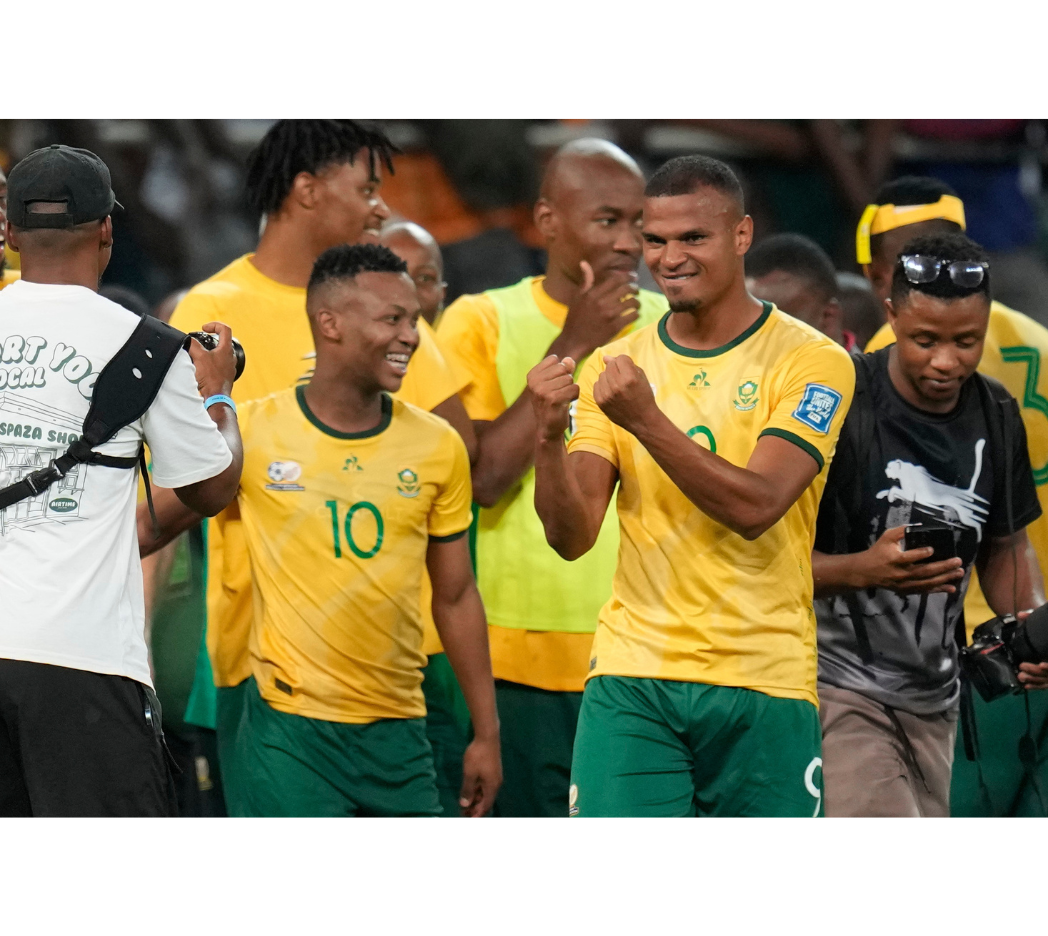
South Africa players celebrate after a World Cup 2026 group C qualifying soccer match between South Africa and Rwanda at Mbombela Stadium, in Nelspruit, South Africa, Oct. 14, 2025. (AP Photo/Themba Hadebe, File)
English broadcaster Peter Drury delivered an iconic line, “Goal for South Africa… goal for all of Africa.”
The commentary from Johannesburg in 2010 still marks the beginning of that World Cup, when South Africa hosted Mexico in the opening match and Siphiwe Tshabalala scored the tournament's first goal—a moment fans describe as historic for both the team and the continent of Africa.
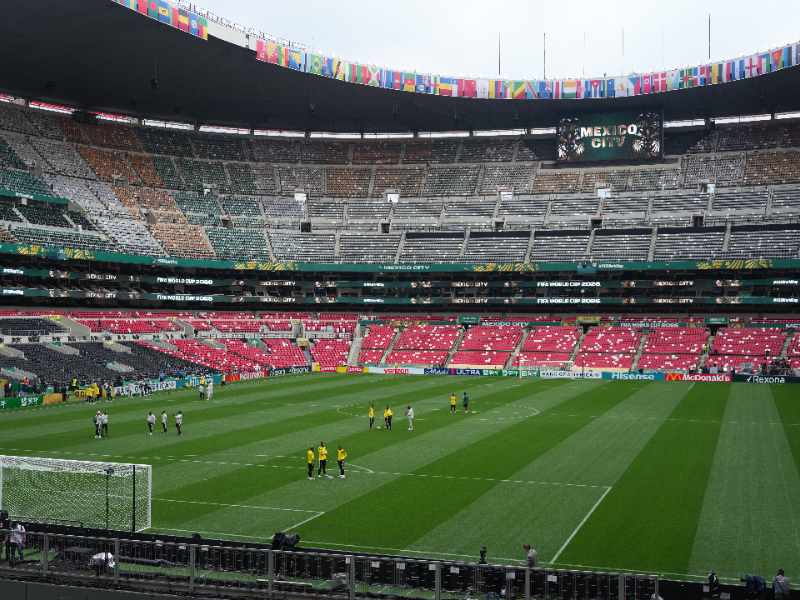
On June 11, 2026, South Africa and Mexico will meet again in the opening match of the FIFA World Cup, this time at Estadio Azteca in Mexico City. The venue, designated as Mexico City Stadium for tournament operations, becomes the first in World Cup history to host three opening matches, following the 1970 and 1986 World Cup finals.
Having last appeared as host nation in 2010 (a 1–1 draw against Mexico), South Africa is drawn in Group A alongside co-host Mexico, South Korea and Czechia.
Beyond the match itself, fans and analysts say the 2026 tournament is expected to create an atmosphere extending far beyond the stadiums.
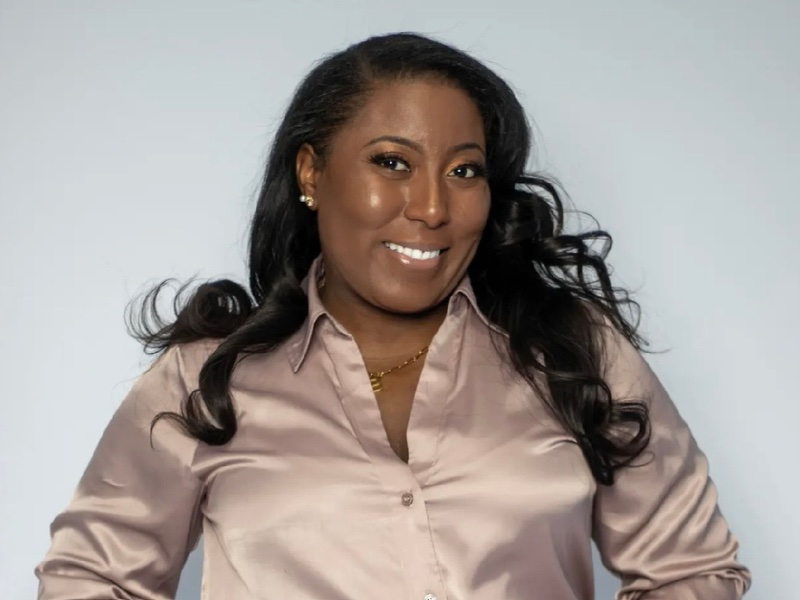
Tracey Reavis, CEO and founder of The Savell Group and author of “The Life and Career of David Beckham,” said many supporters travel to World Cup host cities even without tickets simply to experience the culture surrounding the tournament.
“A lot of people who really love this game want to feel the atmosphere, want to feel the environment,” she said. “The fan zones and those kinds of experiences that are going to happen in the various different host cities— and even cities that are not host cities —are part of what makes the World Cup special.”
Africa’s Record Representation
The 2026 World Cup is the first edition of the tournament to feature 48 teams, resulting in Africa (CAF) being represented by 10 nations —the largest number in the continent’s history.
The African teams that will be representing include South Africa, Morocco, Egypt, Senegal, Algeria, Tunisia, Ghana, Côte d’Ivoire, and DR Congo.
The expansion increases CAF’s allocation compared with previous formats, which often limited continental representation and forced early elimination between top-ranked African sides during qualifying.
Football officials in Africa have emphasized that this change increases continental representation and reduces the concentration of early exits before the tournament stage, leading to broader implications for competition structure, revenue distribution, and player exposure.
In a statement on their official website, CAF president Patrice Mostepe said, “This is a recognition of the substantial growth and global competitiveness of African Football. We are confident that the African National Teams at the FIFA World Cup 2026 will make us proud and that an African Nation will be Champions of the FIFA World Cup.”
South Africa enters the tournament under manager Hugo Broos, who has been in- charge of the team since 2021.
Under Broos, the team generally favors a 4-2-3-1 formation, though the system remains a hybrid with fluid transitions into 4-3-3 or 3-5-2 structures. While the squad benefits from high energy levels and a competitive spirit, they are hindered by a lack of international experience and persistent difficulties in converting scoring opportunities.
Oswin Appollis, currently with Polokwane City, remains a primary attacking option anticipated to provide threat from wide positions.
Opening Match Significance
The South Africa vs. Mexico fixture carries not only historical repetition but also global significance as the first match of the 48-team World Cup.
For Africa, South Africa’s presence leads the continent’s largest-ever delegation, signaling a major shift in continental representation and competitive balance at the highest level of international football according to experts.
The 2026 World Cup is defined as “the largest World Cup ever” and “the biggest celebration” by Chuka Onwumechili, a Howard University professor, who emphasized that the host nation, the United States, represents a unique cultural context.
“This country here is really the country where you find different cultures. There is no other country in the world... where are you going to find people from all over the world that are in that country? And that's what America represents.”
Onwumechili says the diversity ensures that when the countries come to the World Cup, “they're going to have pockets of their own fans,” leading to huge numbers of supporters.
Reavis said hosting the tournament across the United States, Mexico and Canada presents logistical challenges unlike previous World Cups.
“This is a huge continent,” said Reavis. “The fact that it’s going to be in all these different time zones makes it logistically sort of like a nightmare.”
However, she noted that FIFA’s regional group-stage structure could help reduce excessive travel for teams and supporters during the opening stage of the tournament.
Security Measures
On the subject of security, Howard Professor expressed confidence in the host nation's ability to manage the crowds. He noted that even non-World Cup international games in the US involve rigorous security, including metal detectors and requiring transparent bags for entry.
Consequently, people "should be rest assured that the security will be there" and will "feel secure when you're on the grounds."
Reavis, who has traveled internationally for major sporting events including the UEFA Euro tournament in Germany, said experience navigating large cities and public transportation systems helps travelers remain safe during global sporting events.
“I’m relatively safe. I try not to look like a tourist,” Reavis said.